

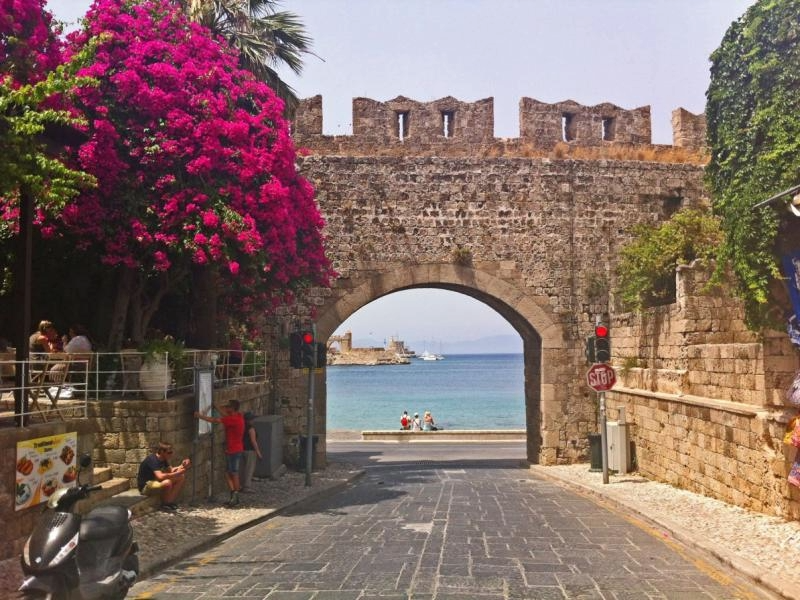
Rhodes Old Town is best treated as a walking visit, not a drive-through attraction. Park outside the historic core, enter through the walls and let the route unfold around the Palace of the Grand Master, Street of the Knights, gates, squares and harbour edge.
Quick answer
- Rhodes Old Town is a UNESCO World Heritage Site and one of the strongest historic walks in the Dodecanese.
- The core visit is pedestrian: expect stone lanes, steps, busy gates and uneven surfaces rather than a car-based sightseeing loop.
- Use edge parking around Rhodes Town and walk in. For detailed parking choices, use the separate Rhodes Town parking guide.
Why the Old Town matters
- UNESCO records the Medieval City of Rhodes as the fortified city shaped by the Knights of St John from 1309 to 1523, later layered with Ottoman and Italian periods.
- The Palace of the Grand Master, the Great Hospital and the Street of the Knights form the clearest Knights-era spine of the Upper Town.
- In the Lower Town, Gothic remains sit alongside mosques, baths, houses and later urban layers, so the interest is not one monument but the whole living city.
A realistic walking flow
- Start from a gate that suits where you parked, then walk toward the Palace of the Grand Master and Street of the Knights before dropping into the busier commercial lanes.
- Mandraki harbour works naturally before or after the Old Town, but avoid trying to move the car for every small shift in the route.
- Allow for slow walking: surfaces can be polished, uneven and crowded, especially in the main lanes during cruise and high-season hours.
Parking without duplicating the parking guide
- Treat the walls as the limit for normal visitor driving and use parking outside or around the historic core.
- Akantia and other edge options can make more sense than circling the gates repeatedly.
- For exact parking strategy, marked bays and current municipal parking notes, read the Where to Park in Rhodes Town guide.
.png)